New Hire Engagement: An Illustrative Team Scenario
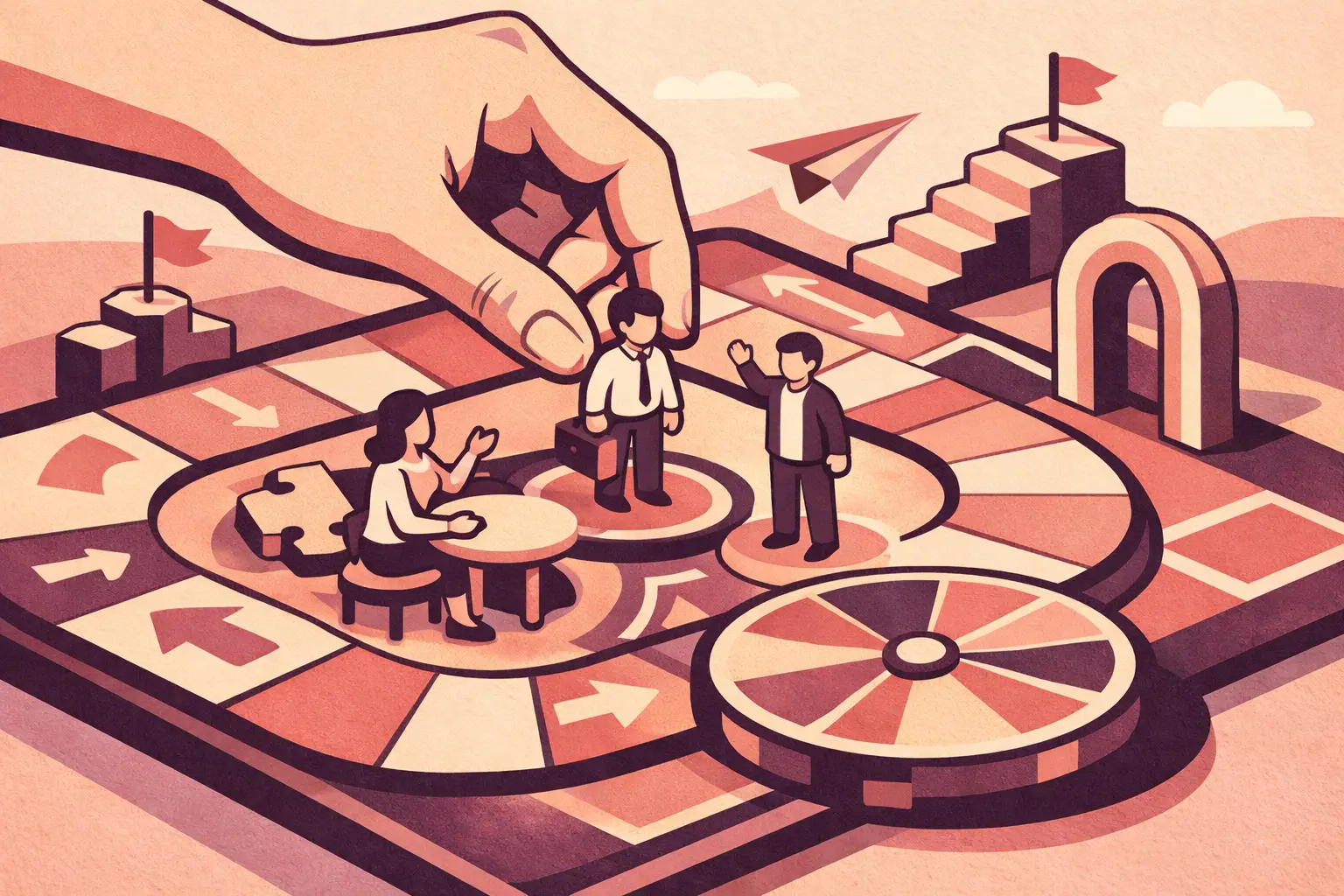
A new hire engagement case study often starts with a familiar problem: a group of smart, capable people joins the same company but does not yet feel like a team. They know job titles, onboarding checklists, and maybe a few names from video calls. What they do not know is how each other thinks under pressure, asks for help, shares ideas, or celebrates a win.
That gap matters. New employees can learn policies in a conference room, but connection takes participation. For one corporate team, an escape room became a fast, high-energy way to move past introductions and create the shared experience that makes future collaboration easier.
The Challenge: New Hires Knew the Work, Not Each Other
The company in this example had brought on eight employees across several departments. Their formal onboarding covered the essentials: systems access, company goals, manager meetings, and training. By the end of the first week, everyone understood their individual responsibilities.
But managers noticed a common early-stage issue. The new hires were polite with one another, yet they were not naturally interacting. During group discussions, a few voices took the lead while others waited for direction. Questions that could have been solved together were still moving upward to managers.
The goal was not to force instant friendship or turn a team event into a lecture. It was to create an activity where employees could communicate naturally, contribute in different ways, and see that asking for input makes the whole group stronger.
A shared meal could have provided time to talk, but it would not necessarily have changed the group dynamic. A traditional training session could have covered teamwork concepts, but it might have felt like more onboarding. The team needed a challenge with a clear mission, a time limit, and enough room for every person to participate.
New Hire Engagement Case Study: The Escape Room Approach
The group booked an escape room experience with a simple brief for the day: work together, stay curious, and have fun. They were not given personality assessments or assigned formal team roles. Instead, they entered an immersive game with puzzles to solve, clues to connect, and a mission to complete before time ran out.
That structure did much of the work. An escape room gives a group a common objective immediately. There is no need to manufacture a conversation starter when the room is already asking everyone to notice details, test ideas, and decide what to try next.
Early in the game, the team showed the same pattern managers had seen at work. Two people began searching for clues while another took charge of organizing information. A quieter employee hung back at first, watching the group attempt a code sequence.
Then that employee noticed a small detail others had missed. It connected to a clue found several minutes earlier, and the group used it to open the next part of the room. The moment changed the pace. People began calling out discoveries more freely, and the team got better at pausing to hear one another before moving forward.
This is one reason escape rooms work well for new hire engagement. The game does not reward the loudest person alone. It rewards observation, memory, communication, and the willingness to build on someone else's idea. Different strengths become visible without putting anyone on the spot.
What Changed During the Experience
By the middle of the session, the group had shifted from working alongside one another to working with one another. They started sharing information more deliberately. Instead of holding onto a clue until they had solved it personally, employees placed discoveries where everyone could see them and explained what they had tried.
They also got more comfortable with productive disagreement. One solution was not working, and the group had to decide whether to keep pushing or move on. Rather than treating the wrong answer as a failure, they tested another approach. That is a small but useful habit for any new team: a missed idea should become information, not embarrassment.
The time limit added energy, but it was not the only reason the activity worked. A good team-building activity has to be challenging enough to require cooperation without being so difficult that people disengage. Escape rooms create that balance when the room design offers multiple puzzle types and opportunities for the group to regroup.
By the end, the team had its own language around the experience. They laughed about a clue they overthought, remembered who spotted a key detail, and talked about how quickly their communication improved once they stopped trying to solve everything alone. Those stories carried into the workweek in a way a standard icebreaker rarely does.
Why the Activity Supported Real Onboarding Goals
The value was not that the employees escaped a room. The value was that they practiced useful behaviors in a low-stakes setting before larger work projects demanded them.
They experienced how quickly information can get lost when people do not share it. They saw the benefit of assigning attention to different parts of a problem. They learned that a team can recover from a wrong turn when people stay calm and communicate clearly.
For managers, the event also offered a clearer view of how new hires interacted. This should not be treated as a performance test. An escape room is a game, and no one should be judged for being less competitive or more reserved. Still, it can reveal positive opportunities: who asks thoughtful questions, who keeps the group organized, who encourages others, and where people may need more confidence to speak up.
The best follow-up is brief and practical. After the activity, a manager can ask what helped the group make progress, where communication got stuck, and what the team wants to carry into its first shared project. The conversation should stay focused on real work habits, not on analyzing every move from the game.
Planning a New-Hire Escape Room Event
Timing makes a difference. For many organizations, the first two to six weeks is a strong window. New employees have enough context to talk about their roles, but they have not yet settled into isolated routines. If hires start at different times, a quarterly event can also help build connections across onboarding groups.
Group size and room selection matter too. A crowded room can leave some people watching instead of participating, while a group that is too small may not get the same teamwork benefit. Choose an experience that fits the number of players and consider splitting a larger department into teams if needed.
The event should also be framed clearly. Tell employees this is a chance to have fun and get to know how the group works together. Do not present it as a hidden evaluation. The difference affects whether people feel free to take creative risks and engage honestly.
For Philadelphia teams, MindEscape offers an active alternative to another office lunch or after-work happy hour. A mission-based experience gives coworkers something to do together, which is especially helpful when a group includes people who are new to the city, new to the company, or simply not eager for forced small talk.
The Trade-Offs to Consider
An escape room is not a replacement for a thoughtful onboarding program. New hires still need clear expectations, manager access, training, and regular feedback. A great team event cannot fix unclear roles or a workplace where people do not feel safe sharing concerns.
It also may not be the right fit for every group. Consider accessibility needs, comfort with enclosed or themed environments, scheduling constraints, and whether employees are being asked to attend outside paid work time. Providing clear information ahead of time and offering reasonable participation options helps make the experience welcoming.
When it fits the team, though, the format has a practical advantage: it creates a memorable moment of cooperation without requiring employees to pretend they already know one another well.
The next time a new group joins your organization, give them more than a handbook and a round of introductions. Give them a shared challenge that makes curiosity, communication, and teamwork feel worth practicing from the start.
How to Use This Illustrative Scenario
The eight-person company described above is an illustrative planning scenario, not a documented MindEscape client case study. It can help an organizer think through participation and debrief questions, but its outcomes should not be quoted as customer evidence.
For a real event, Thai Prison accommodates up to 12 players and offers fully seated-accessible puzzle play. MindEscape's corporate inquiry is the source for current room splits, timing, pricing, and event arrangements; a fictional scenario cannot confirm those details.
Use these MindEscape planning paths
- corporate event inquiry — request current, group-specific logistics
- Thai Prison Escape — see the concrete 2–12-player example
- escape-room team-building guide — set realistic activity goals
- teamwork-results guide — separate observation from unsupported outcome claims