Escape Room Team Building for Stronger Teams
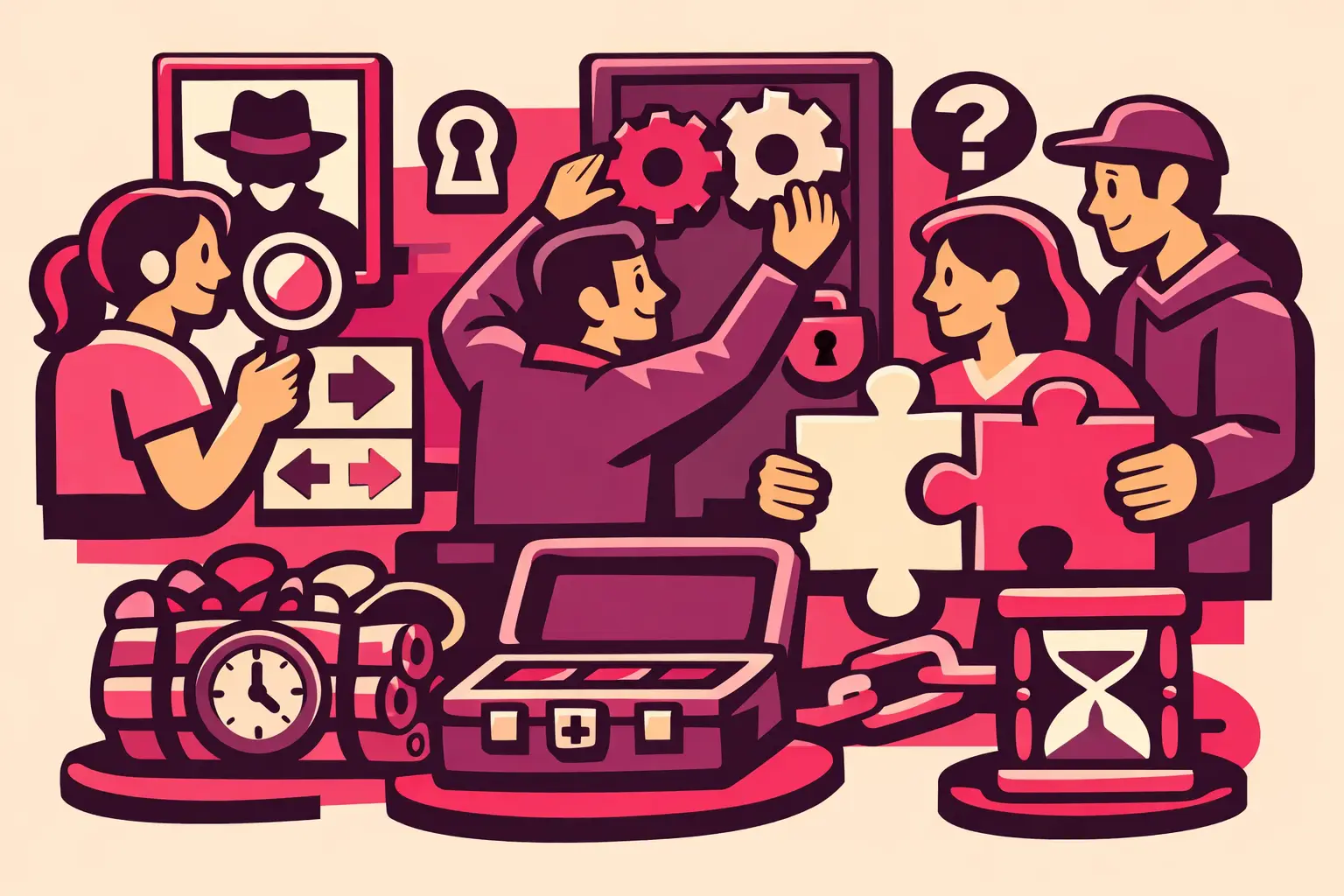
A team that can solve a locked-room mystery in 60 minutes may not solve every workplace challenge by Monday morning. But escape room team building can reveal something far more useful: how people communicate when the clock is running, information is scattered, and no one can finish the mission alone.
For corporate groups, that shared pressure is the point. An escape room gets coworkers out from behind screens and into a live challenge where ideas need to be spoken, clues need to be shared, and every contribution can move the group forward. It is active, memorable, and a lot more engaging than another conference-room icebreaker.
Why escape room team building works
Most teams spend their workdays divided by roles, departments, schedules, and inboxes. A well-designed escape room removes those familiar routines. The marketing manager may spot a visual pattern that the analyst missed. The quietest person in the room may connect two clues before anyone else does. A new employee may become the person who keeps the group organized.
That role shift creates a more natural kind of connection. Coworkers are not being asked to perform trust exercises or invent fun facts about themselves. They are working toward a clear goal together: solve the puzzles, complete the mission, and beat the clock.
Escape rooms also make collaboration visible. Teams quickly learn that holding onto a clue, talking over others, or having one person control every puzzle slows everyone down. On the other hand, clear updates, curiosity, and a willingness to hand off a challenge often lead to progress. The lessons land because people experience them rather than listen to a presentation about them.
What your team actually practices
An escape room is entertainment first. No one should mistake it for a formal leadership assessment or a substitute for training. Still, the best games naturally give teams a chance to practice workplace habits in a low-stakes setting.
Communication under pressure
Players need to say what they find, explain what they are trying, and listen when someone else has a different theory. The time limit adds energy without making the experience feel like work. A team that starts with scattered conversations often learns to call out discoveries and keep each other updated.
Problem-solving from different angles
Escape room puzzles reward more than one type of thinker. Some players are strong with numbers, wordplay, patterns, physical objects, or story details. Others excel at keeping track of what has already been tested. This variety gives people a reason to appreciate skills they may not see during a typical workday.
Decision-making and adaptability
Not every idea works. A code may fail, a theory may lead nowhere, or the group may need to abandon a puzzle and return later with fresh eyes. Teams that do well learn to test, adjust, and move on without getting stuck on being right.
Shared wins that feel real
A good escape room gives the entire group small victories along the way. A lock opens. A hidden compartment appears. A clue suddenly makes sense. Those moments create momentum, laughter, and the kind of shared stories people bring back to the office.
Choosing the right escape room for your group
Not every room is the right fit for every team. Before booking, consider your group size, the experience level of your players, your schedule, and the tone of the event.
A first-time group usually benefits from a room with a clear mission, approachable puzzles, and an engaging theme. Experienced players may want a higher difficulty level or a more complex story. If your team includes a mix of newcomers and escape room regulars, choose an experience that rewards teamwork rather than obscure trivia or overly technical knowledge.
Group size matters just as much. A room can feel crowded if too many people are reaching for the same clue, while a very small group may have trouble covering every part of the game. For larger departments, splitting into multiple rooms can add friendly competition, but avoid making the event feel cutthroat. The goal is connection, not proving which team is best at reading tiny numbers on a padlock.
Accessibility and comfort should be part of the conversation, too. Ask participants about mobility needs, sensory concerns, and whether anyone is uncomfortable with themes involving darkness, tight spaces, or intense suspense. A strong team event makes people feel included, not pressured to push through an experience that does not work for them.
How to plan a team event people want to attend
The simplest escape room team building event starts with a clear invitation: a fun, collaborative activity with a defined time commitment. Employees are more likely to show up ready to participate when they know what to expect.
Schedule the experience at a time that does not create extra stress. An after-work event can be a great reward, while a midday booking may work better for teams with family obligations or long commutes. Build in time before and after the game. Players need a few minutes to arrive, get briefed, take a group photo, and celebrate the result.
Food and drinks can extend the event, but they do not have to be the centerpiece. If your budget is limited, prioritize the game itself and a short post-game gathering. The shared experience is what gives the conversation something to build on.
For Philadelphia teams looking for a local group activity, MindEscape gives coworkers a chance to step into an immersive mission instead of sitting through another predictable outing. The value is not just the puzzles. It is seeing colleagues react, contribute, and celebrate in a setting with no office hierarchy attached.
Set the tone before the door closes
A few words from the organizer can make a major difference. Let people know the event is about participating, not being the smartest person in the room. Encourage everyone to share what they notice, ask for help, and give others space to try ideas.
This matters most if your group includes managers and direct reports. Leaders should resist the urge to take charge of every puzzle. The best team-building moments often happen when leaders model curiosity, listen closely, and let someone else lead the next breakthrough.
It also helps to remind players that asking for a hint is part of the game. Some teams treat hints as failure and waste too much time trying to force a solution. In a workplace context, that is a useful lesson on its own: knowing when to ask for help can be a strength.
Make the post-game conversation count
You do not need a formal debrief with worksheets and performance scores. That can drain the fun from an event that was supposed to energize people. A few casual questions over coffee, lunch, or a drink are enough to keep the team-building value alive.
Ask what strategy helped the group most, when communication got difficult, and which moment changed the game. You might also ask whether anyone was surprised by a teammate's approach. Keep it positive and specific. This is a chance to recognize good collaboration, not turn a recreational activity into a critique session.
If the event is part of a larger offsite or company gathering, connect the game back to a real team goal in one sentence. For example: “We made progress when we shared information early - let’s bring that same habit into our project kickoff next week.” That is more effective than forcing a long list of business analogies.
When an escape room may not be the best choice
Escape rooms are a strong fit for groups that want active, face-to-face entertainment. They may be less practical for a fully remote team, a very large organization with limited time, or a group with significant accessibility needs that the venue cannot accommodate. In those cases, a hybrid event, a facilitated workshop, or an activity designed for a larger audience may be a better match.
They also work best when participation is encouraged rather than mandated. If coworkers feel forced into an unfamiliar activity with no context, enthusiasm can drop before the first clue appears. Give people enough information, choose a welcoming venue, and frame the event as a chance to have fun together.
The right room will not magically fix a disconnected workplace. What it can do is give your team an hour of real collaboration, plenty of laughs, and a shared win worth talking about afterward. Pick a mission that fits your group, give everyone permission to contribute, and let the next clue start the conversation.
Give the Team-Building Page One Clear Job
Use this article to explain what participants do and how to debrief it; let the corporate page own the transaction. The game supplies a shared deadline, distributed clues, and visible decisions, while the organizer supplies the purpose and follow-through.
At MindEscape, Thai Prison is the straightforward 2–12-player example and is fully wheelchair accessible with puzzles playable seated. Jack and Greenhouse support 2–8 but differ sharply in atmosphere, challenge, and sensory considerations.
Use these MindEscape planning paths
- corporate inquiry — handle pricing, schedules, and room splits
- Thai Prison Escape — review the larger-team option
- room comparison — check room fit before assigning teams
- bounded results guide — plan an evidence-conscious conversation afterward