Why Escape Rooms Build Teamwork Under Pressure
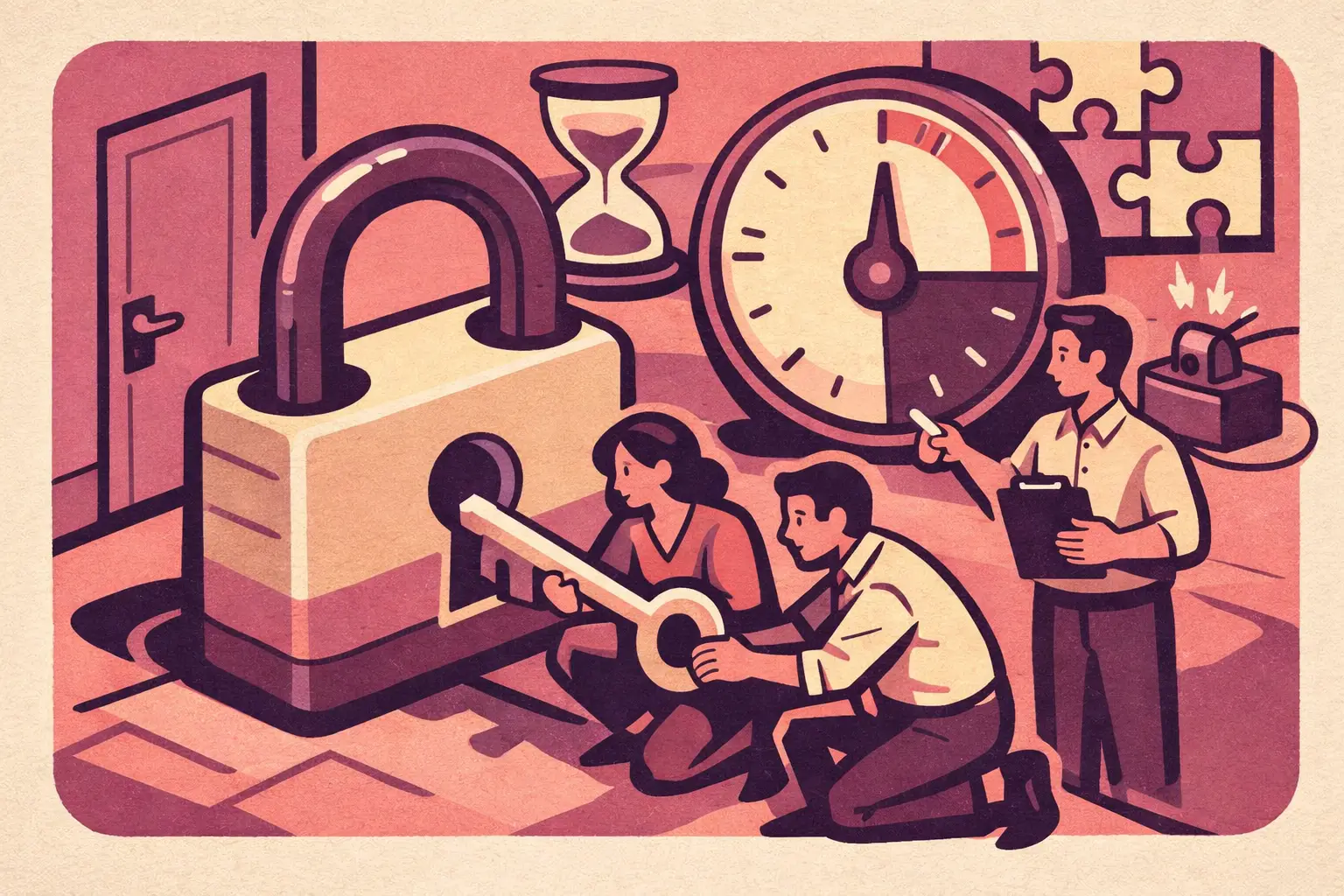
A team can sit through a long meeting and still learn very little about how it works together. Put that same group in a locked-story setting with 60 minutes on the clock, a strange clue in hand, and several possible paths forward, and the habits appear quickly. That is why escape rooms build teamwork: they give people a concrete problem that cannot be solved well by one person working alone.
At MindEscape near South Street in Philadelphia, the point is not to prove who is smartest. The best groups notice more, share information early, test ideas without defensiveness, and keep moving when a lead goes nowhere. Those are useful habits for coworkers, but they matter just as much for families, friends, birthday groups, and couples trying something more active than dinner.
An escape room gives teamwork a real job
Many group activities are social, but they do not require cooperation. At a restaurant, everyone can have a good time while holding separate conversations. During an escape room, progress is shared. A detail one guest spots may only matter when another guest connects it to an object, a pattern, or an earlier discovery.
That interdependence changes the conversation. Instead of asking people to "work as a team," the room gives them a reason to do it. The group has a common goal, limited time, and a setting full of information that needs to be gathered and interpreted.
The time limit helps, but it is not there simply to create stress. It makes prioritizing visible. Teams have to decide whether an idea deserves another minute, whether someone should search a different area, and when to bring everyone together around a promising discovery. A group that communicates clearly gains time. A group that keeps clues private or argues over every theory loses it.
Why escape rooms build teamwork without feeling like training
The strongest team-building activities do not feel like a lecture with props. Escape rooms work because the lesson is experienced, not announced. You learn that a teammate is observant because they catch a small visual detail. You learn who can organize a pile of information. You learn who stays calm when the obvious answer fails.
Just as importantly, guests can try different roles without being assigned one. A quieter player may become the person who tracks clues and notices what has been overlooked. Someone who usually takes charge may discover that the group moves faster when they ask, rather than tell. These shifts can be surprisingly useful because the stakes are playful. A wrong guess is not a workplace mistake or a family disagreement. It is simply a theory to revise.
That does not mean every group will cooperate perfectly. Competitive personalities can talk over others, and friends who know each other well can fall into familiar patterns. The room does not magically erase those dynamics. It does, however, make them easier to spot in a low-stakes setting. A good reset is simple: say what you found, explain what you are trying, and invite another person to check your thinking.
Communication becomes specific
Vague communication is one of the fastest ways to slow a room down. Saying "I found something" is less helpful than saying where it was, what it looks like, and why it might matter. Escape rooms reward that kind of precision.
Groups also improve when they separate observations from conclusions. "These symbols repeat" is an observation. "They must be the answer" is a conclusion. Sharing the first gives teammates more material to work with; treating the second as certain can send everyone down the wrong path. This is a small distinction, but it keeps collaboration open rather than rigid.
Different strengths have room to matter
Not every contribution looks like solving a puzzle immediately. One person may scan the room thoroughly. Another may remember a detail mentioned ten minutes earlier. Someone else may be excellent at keeping physical materials organized or recognizing when two partial ideas belong together.
This is especially valuable for mixed groups. Corporate teams often include people with different work styles and levels of seniority. Families may include guests who are eager to search alongside guests who prefer to observe and think. Friends may have experienced players and first-timers in the same booking. A well-run group does not expect everyone to contribute in the same way. It makes room for different kinds of attention.
The room you choose affects the teamwork experience
Theme, challenge level, group size, and guest comfort all shape how a team works. Picking a room based only on the number of players can leave part of your group disconnected from the experience.
For a group that enjoys suspenseful mystery, Jack the Ripper brings a horror-leaning investigation for two to eight players. It can suit teams that like an atmospheric setting and want to compare theories as they piece together a story. Because the tone is darker, it is worth checking that everyone in the group is comfortable with horror before making it the plan.
Thai Prison Escape is an adventure experience for two to twelve players. Its larger player range can make it a practical option for a bigger friend group, birthday gathering, or team outing. The puzzles can be played while seated, and the room is wheelchair accessible, which can help groups plan for guests with mobility needs. Accessibility needs vary, so contact the venue ahead of time if your group needs specific guidance.
Little Greenhouse of Horrors is the harder botanical mystery and horror option for two to eight players. It asks more of groups that enjoy sustained challenge and do not mind a stranger atmosphere. The room is wheelchair accessible, and its puzzles are playable seated, but it includes flashing lights and scents or aromas. Check in with MindEscape before booking if mobility or sensory considerations are part of your planning.
The right choice is not always the hardest room. For a first escape room, a group often benefits more from a theme that makes everyone curious and comfortable enough to participate. For experienced players, a tougher challenge may be exactly what creates the satisfying back-and-forth they want. For a corporate organizer, capacity and accessibility may be more important than scare level. Start with who is coming, not just what sounds dramatic.
A few habits make the group better before the clock starts
You do not need a formal strategy session, but a quick agreement can prevent the common frustrations. Decide that everyone will announce discoveries, keep used materials in one visible area, and speak up if they are stuck. If several people are working on the same clue, make sure someone is also looking for the next connection.
Avoid splitting into isolated pairs for the entire game. Dividing up briefly can be efficient, especially in a larger room, but the group needs regular moments to reconnect. A clue found by one pair may be the missing context for another pair's work. Think of the team as a shared information network, not separate puzzle stations.
It also helps to treat failed attempts as useful information. If an approach does not work, say so clearly and move on. Hiding a failed theory out of embarrassment wastes time and can lead someone else to repeat it. The most effective teams are not the ones that never make wrong guesses. They are the ones that discard wrong guesses quickly and without blame.
The value lasts longer than the final reveal
An escape room will not replace clear expectations or good leadership in a workplace. It will not solve every family tension, either. What it can do is give a group a memorable reference point: the moment someone noticed the overlooked clue, the moment the team stopped talking past each other, or the moment a last-minute idea brought several pieces together.
That is why the post-game conversation is often part of the experience. Ask what helped the group move forward and where communication got tangled. Keep it light. The goal is not to grade anyone's performance; it is to notice the strengths that appeared when the group had something worth solving together.
If you are planning a Philadelphia group activity, choose a room whose theme and practical needs fit the people in front of you. Then let everyone take part, share what they see, and enjoy the satisfying moment when separate ideas become one way out.