How to Read Horror Room Reviews Before Booking
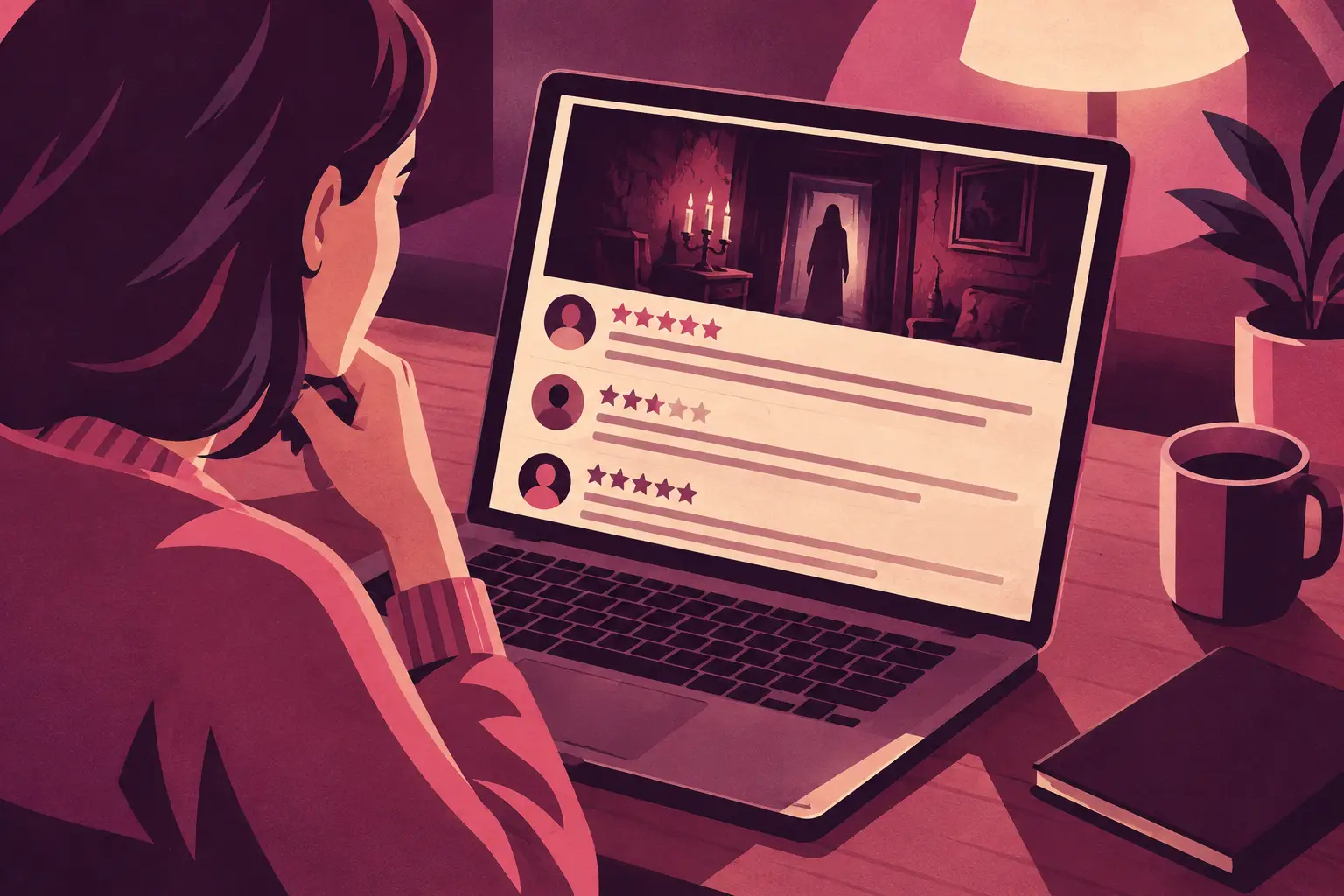
A five-star rating can tell you that a group had fun. It cannot tell you whether the room’s tension is the kind your group wants. That is why horror room reviews are most useful when you read past the score and look for the details that affect your actual hour in the game.
For a Philadelphia group planning an escape room, the right choice may come down to atmosphere, challenge level, accessibility, or whether one guest enjoys suspense while another would rather avoid startling moments. Reviews can help with all of that, but only if you know which comments deserve the most weight.
Start with the reviewer’s group, not their rating
A review means more when the reviewer sounds like your group. A couple on a date night, a team of experienced escape-room players, and a family trying its first game may all leave happy reviews of the same room for completely different reasons.
When reading comments, look for clues about group size and experience. Phrases such as “our first escape room,” “we have played dozens,” “we brought coworkers,” or “the kids helped solve” give you context. An enthusiastic expert player may praise a room’s difficulty, while a first-time group may describe the very same challenge as overwhelming. Neither reaction is wrong. They are answering different questions.
The useful question is not, “Did they love it?” It is, “Would people like us love it for the same reason?”
If your group includes several strong puzzle solvers, pay attention to comments about pacing, complexity, and whether everyone had something to do. If you are organizing a birthday outing or reunion, comments about collaboration and clear game-master guidance may matter more than a reviewer’s opinion of how difficult the room was.
What horror room reviews can tell you about the mood
“Horror” covers a wide range of experiences. Some guests use the word to mean a dark, eerie setting and a story with sinister edges. Others mean they expect frequent scares, intense pressure, or a level of discomfort they may not enjoy. Read the language closely rather than relying on the category label.
Words like “creepy,” “atmospheric,” “mysterious,” and “suspenseful” often point to a room where the mood and story carry the experience. Comments focused on “jump scares,” “too intense,” or “not scary enough” reveal expectations, but they are especially subjective. A guest who hates being startled may call a modest moment terrifying. A horror-film fan may call the same moment tame.
Look for repeated descriptions across several reviews. One person saying a room was frightening tells you about that person. Several guests independently mentioning a tense atmosphere, theatrical storytelling, or a steady sense of unease gives you a more reliable picture of the room’s tone.
It also helps to separate scary from stressful. A ticking clock, challenging puzzles, and a locked-room premise can feel intense even without a horror-heavy atmosphere. If someone in your group dislikes both suspense and time pressure, a review that calls a game “intense” is worth investigating rather than brushing aside.
Read for the practical details people mention in passing
The most helpful review details are often not the dramatic ones. A line about a game master giving well-timed hints, a comment that a group of eight had room to participate, or a note about a guest’s sensory needs can be more useful than a paragraph saying, “Amazing experience.”
As you compare reviews, keep an eye out for four practical signals:
- Group fit: Did the reviewer mention whether everyone stayed involved, or whether the experience suited a couple, friends, coworkers, or a larger party?
- Puzzle expectations: Are comments centered on observation, teamwork, story details, or a harder-than-expected challenge?
- Support during the game: Do guests mention clear instructions, helpful hints, and a welcoming host?
- Comfort considerations: Do reviews mention darkness, flashing effects, strong scents, confined-feeling settings, or mobility needs?
A review will not always cover each point, and it should not be your only source of planning information. But patterns can help you form better questions before booking.
For example, Little Greenhouse of Horrors is a harder botanical mystery with horror elements. It is wheelchair accessible, and its puzzles can be played from a seated position. It also includes flashing lights and scents or aromas. Those details may be exactly what makes the room memorable for one group and a reason for another group to contact us before booking to discuss mobility or sensory questions.
Match the theme to your group’s comfort level
A strong horror theme should add story, anticipation, and discovery. It should not force a group into a choice they did not realize they were making. Before you place too much weight on horror-themed reviews, decide what your group wants from the genre.
Are you looking for a dark mystery with an unsettling atmosphere? Do you want a difficult game with a horror setting? Or are you choosing a room primarily because your friends want a thriller-style activity? These are different goals, and reviewers may be measuring the room against a different one.
At MindEscape, Jack the Ripper is built around a horror-mystery premise for groups of two to eight. Its title alone may lead some guests to expect one type of experience, while others are looking for a story-driven mystery. Reading reviews for tone can help, but your group’s own expectations should lead the decision.
A themed room is not automatically the right pick for every occasion. A mixed-age family group, for example, may want a different atmosphere than a gathering of horror fans. For corporate teams, the balance often depends on how well colleagues know one another and whether the goal is lighthearted collaboration, a serious challenge, or a memorable after-work activity.
Use negative reviews carefully
Negative reviews can be extremely helpful, but they need context. A complaint about hard puzzles may be a warning to beginners or a recommendation for enthusiasts. A guest who wanted more scares may still have enjoyed a polished, immersive room that simply had a different style of horror than they expected.
Give more attention to specific, fair critiques than to broad statements. “We needed more help early on” tells you something concrete about that group’s experience. “Worst room ever” without explanation does not give you much to work with.
Also look for whether a criticism conflicts with what you want. If reviewers say a game is challenging, detailed, and not ideal for players who want an easy win, that could be perfect for a seasoned team. If your group is new, it may be a signal to choose a room that better matches your confidence level or to arrive ready to communicate and ask for hints when needed.
The same rule applies to comments about group size. A review from two players may not predict how a group of ten will feel. Thai Prison Escape, for instance, accommodates two to 12 players and is wheelchair accessible, with seated puzzle play available. That makes it worth considering when you are planning for a larger group or thinking carefully about how everyone can participate, even though its adventure theme may appeal to a different taste than a horror room.
Check the date before you trust the details
Escape-room experiences can change over time. A review written years ago may still capture the spirit of a room, but it may not reflect current operations, guidance, or the experience you will have on the day of your visit.
Prioritize recent reviews for practical signals, especially when they mention staff communication, room condition, pacing, or planning details. Older comments can still be useful for understanding long-running themes, but they should not be the final word on what to expect now.
Be cautious with reviews that make claims without context. A guest may have had a unique scheduling issue, arrived with a group that was not prepared for the theme, or simply preferred a different style of game. Read broadly enough to notice patterns instead of letting one unusually glowing or disappointed review make the decision for you.
Questions to settle before you book
Reviews can narrow the field, but they cannot know your group as well as you do. Before choosing a horror-themed escape room, settle a few basics together: how much suspense your group wants, whether anyone has sensory or mobility considerations, whether you are seeking a harder challenge, and how many people will be playing.
If the answer is uncertain, ask before booking. It is always better to choose with clear expectations than to spend the first ten minutes of a 60-minute game wishing you had picked a different theme.
The best horror-room experience is not necessarily the darkest or most difficult one. It is the one that gives your particular group a reason to lean in, compare clues, laugh when the tension breaks, and leave Philadelphia still arguing over the moment they almost solved it.