Escape Room or Trivia Night? Pick the Better Group Plan
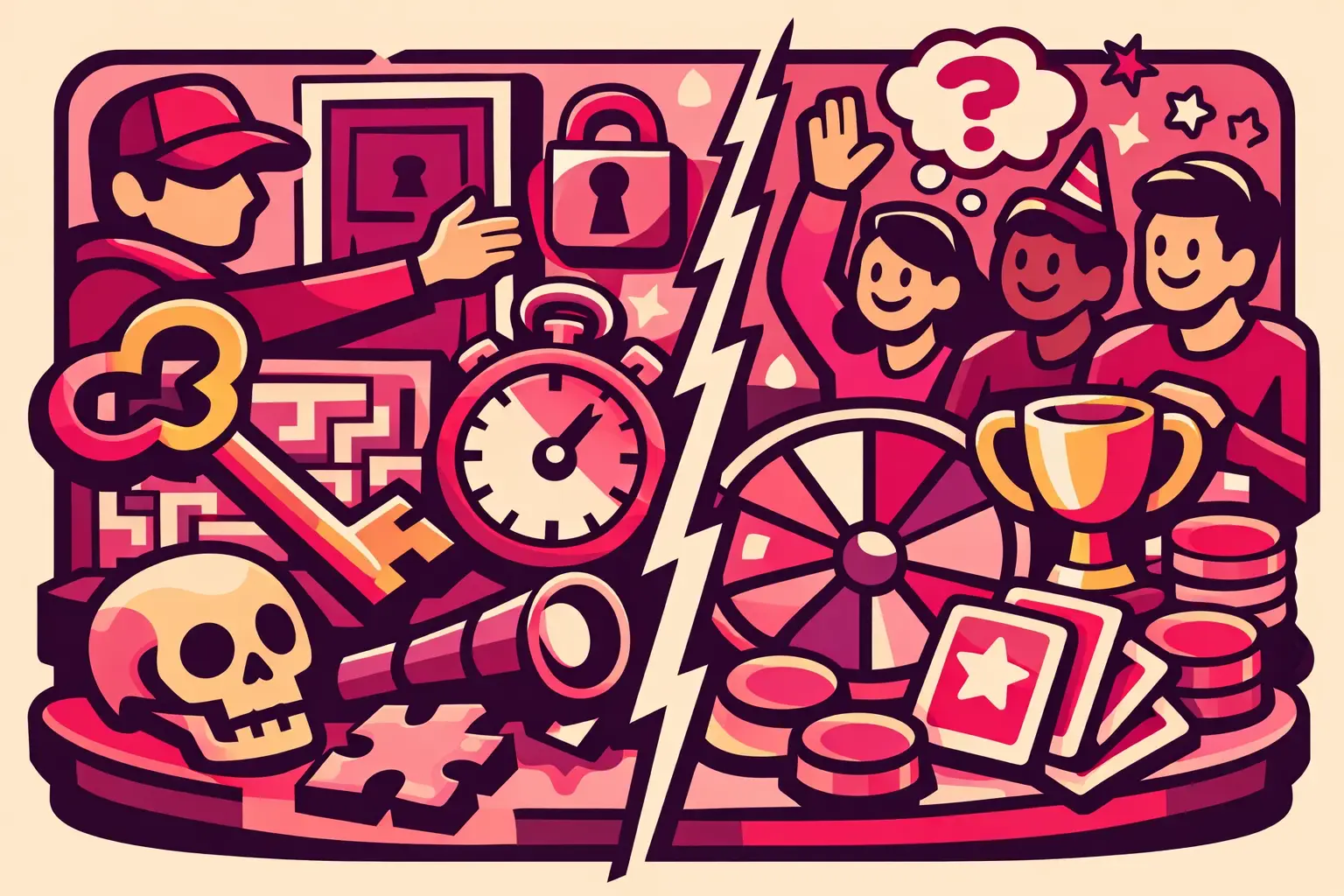
A group chat has one job: turn “we should do something” into an actual plan. But when the choice is an escape room or trivia night, the right answer depends on what kind of night your group wants. One puts everyone inside the action. The other lets you compete from a table, usually with food and drinks close by.
Both can be a great break from the usual dinner-and-a-movie routine. The difference is in the energy. An escape room gives your group a shared mission with a clock running. Trivia gives everyone a chance to bring out random knowledge, debate answers, and hope nobody else knows the capital of Kyrgyzstan.
Escape Room or Trivia Night: What Feels More Social?
Trivia is social in a relaxed, conversational way. You sit together, talk through answers, make jokes between rounds, and can catch up with people you have not seen in a while. It works especially well for a casual weeknight, a smaller group, or friends who want low-pressure entertainment around dinner.
An escape room is social in a more active way. You are moving around, searching for clues, testing ideas, and reacting in real time as the room reveals its secrets. Instead of talking about what happened at work, your team is figuring out what a strange symbol means or whether a hidden compartment just changed the entire mission.
That difference matters if your group includes people who are tired of sitting still. For a birthday, visiting family, a double date, or a Saturday plan with friends, an escape room creates a stronger sense that you did something together. It gives the group a story to replay afterward: the clue someone spotted at the last second, the lock that fooled everyone, or the moment a quiet teammate cracked the puzzle that moved the mission forward.
Choose Trivia When You Want a Flexible, Low-Key Night
Trivia has a clear advantage when flexibility is the priority. Teams can usually arrive, order food, settle in, and participate without much preparation. If someone runs late or a friend needs to leave early, the night can keep rolling.
It can also be a comfortable option for groups that do not know each other well. Coworkers, networking groups, and casual acquaintances may prefer the easy structure of answering questions from a table. There is less pressure to coordinate physically or make fast decisions together.
Trivia rewards broad knowledge and quick recall. That can be fun when your group has a mix of sports fans, movie buffs, music experts, history lovers, and people with an alarming amount of knowledge about reality TV. Yet it can leave some players on the sidelines if the categories never land in their wheelhouse. A person may have plenty to contribute socially while feeling like they have not contributed to the score.
There is also the format to consider. Many trivia nights take place in busy bars or restaurants, where noise, wait times, and distractions are part of the experience. That is ideal for groups looking for a casual hangout. It may not be ideal if you are planning a focused team event or want an activity that feels like the main event rather than background entertainment.
Choose an Escape Room When You Want Everyone Involved
An escape room gives every person something to do. One player may notice a visual pattern. Another may organize information, solve a word puzzle, work through a number sequence, or connect a clue to the room’s story. You do not need to be a trivia expert or a puzzle professional. You need curiosity, communication, and a willingness to try ideas.
That is why escape rooms work so well for mixed groups. Teens can contribute alongside parents. First-time players can work with experienced escape room fans. Coworkers who rarely interact outside their normal roles can see each other think, lead, listen, and adapt under a little pressure.
The time limit changes the mood in the best way. A mission with a countdown creates momentum from the first clue to the final reveal. People are not waiting for the next round to begin. They are already part of the action.
For corporate groups, that active participation is especially valuable. A good team-building activity should not feel like another meeting with name tags. It should give people a real reason to collaborate. In an escape room, communication has immediate consequences. If someone finds a clue but does not share it, the team loses time. If the group listens, delegates, and stays organized, progress becomes visible.
The Real Question: Do You Want Knowledge or Problem-Solving?
Trivia asks, “What do you know?” An escape room asks, “What can you figure out together?”
Neither is automatically better. If your group loves friendly competition, pop culture debates, and the comfort of a table, trivia is a solid choice. It is familiar, easy to explain, and works well when the conversation is just as important as the activity.
If your group wants novelty, challenge, and a more memorable shared experience, choose an escape room. The puzzles are not about memorizing facts. They are designed to reward observation, creativity, logic, and teamwork. Someone who would never know an obscure award-show winner may be the person who spots the hidden connection that gets the whole team moving.
That makes an escape room especially appealing for celebrations. A birthday group does not just attend an event. They take on a mission. Friends visiting Philadelphia do not just fill an hour before dinner. They get an experience that feels specific, active, and worth talking about later.
Consider Your Group Size, Schedule, and Energy Level
Before you decide, look at the practical details. Trivia nights often have a recurring schedule and may be easy to join with a small group. Escape rooms are reservation-based and give your group a dedicated time slot, which is helpful when you want a plan that starts on time and stays focused.
Your group size matters, too. A small trivia team can work well, while larger groups may have trouble giving everyone a chance to weigh in. In an escape room, the best experience comes from choosing a room designed for your number of players. Too few people can make a larger mission difficult. Too many can create clutter if everyone reaches for the same clue. The goal is enough people to bring different perspectives without turning the room into chaos.
Think honestly about energy. If your friends want to relax after a long day, trivia may fit the mood. If they are ready to laugh, compete, move around, and chase a finish line, an escape room brings more momentum. It is not about which activity is harder. It is about whether the group wants to watch the night happen or make it happen.
Why Escape Rooms Win for Milestones and Team Bonding
For a routine Wednesday, trivia can be exactly right. For an occasion you want people to remember, an escape room usually has the edge.
Shared challenge creates quick connection. You learn who stays calm when time is short, who notices details, who keeps the group organized, and who has the wild idea that somehow works. Those moments build inside jokes and genuine team chemistry without forcing anyone into awkward icebreakers.
At MindEscape, groups come in with different experience levels and leave with the same thing: a mission they tackled together. That is the value of choosing an activity where everyone can participate, not just the person with the fastest answer.
If you are still split between the two, use the question that settles most plans: will your group remember the answers, or will they remember the adventure? Pick the night that gives them something to talk about on the way home.
Choose by Participation Style
Trivia works when a group wants seated recall, broad drop-in energy, and category knowledge. An escape room works when the group wants a reserved story, physical searching, connected puzzles, and a single 60-minute mission. Neither format wins for every crew.
At MindEscape, a pair can play any current room, Thai Prison accommodates up to 12, and the theme changes the mood from adventure to suspense or a harder sensory mystery. Standard games are private Monday–Thursday and private for groups of five or more on peak days.
Use these MindEscape planning paths
- compare MindEscape rooms — see whether an escape-room format fits
- Thai Prison Escape — evaluate the largest current room
- date-night planning — choose by the two players' preferred mood
- team-event planning — confirm logistics for an organized group