Why an Escape Room for Adults Beats Another Bar Night
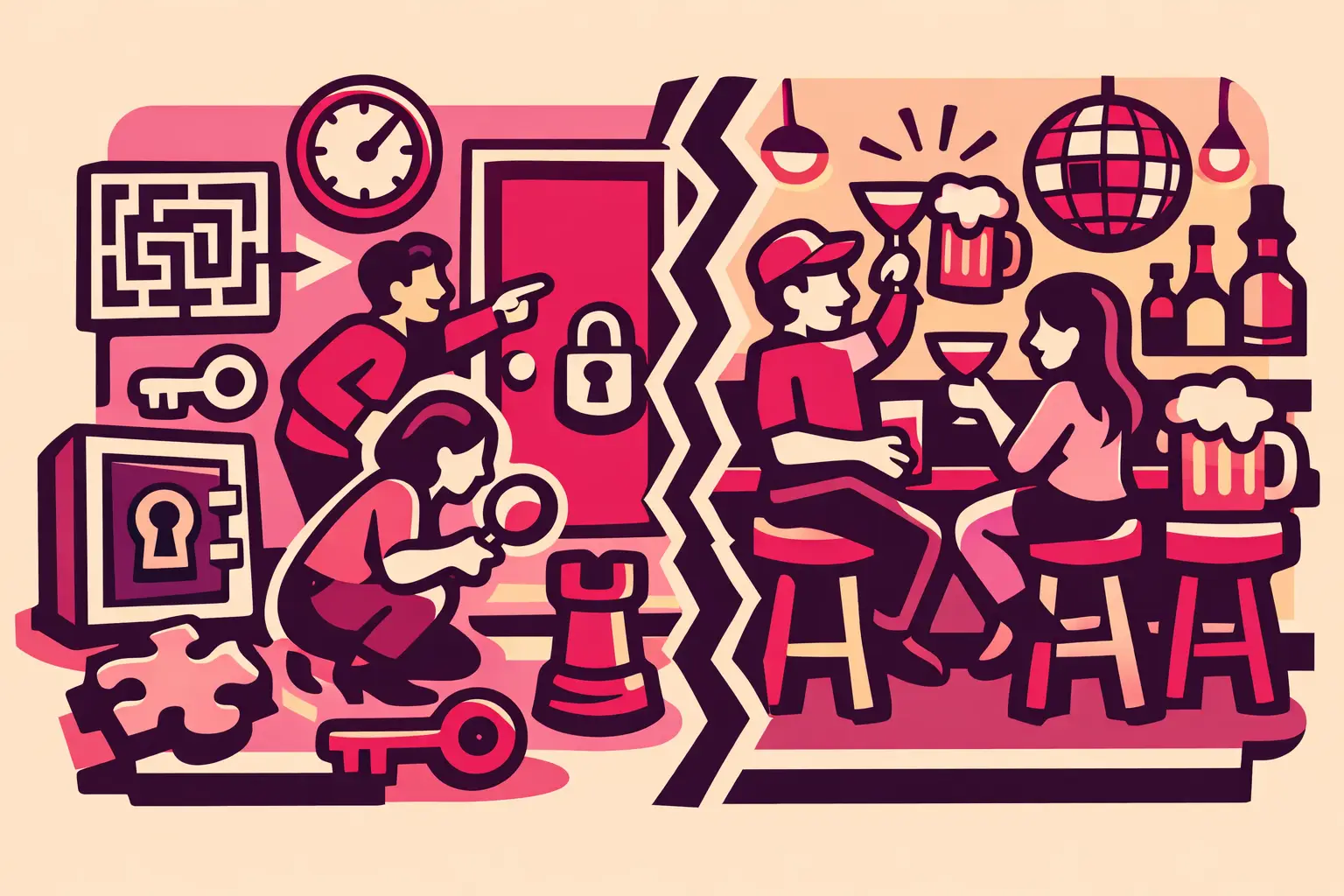
By 8:30 p.m., another bar night can start to feel like every other bar night: loud music, split conversations, and a debate about where to go next. An escape room for adults gives the group a mission instead. You are not just meeting up. You are racing a clock, piecing together clues, and trying to complete a story before time runs out.
That shift matters when you are planning a birthday, date night, double date, coworker outing, or weekend activity with friends. Adults want something social, but they also want a reason to put their phones down and be present. Escape rooms create that reason quickly.
Why adults keep choosing escape rooms
An escape room is built around participation. Every person in the room has something to notice, test, organize, or connect. One player may spot a pattern in a painting while another realizes a word puzzle points to a hidden compartment. The best moments happen when separate ideas suddenly fit together.
That makes the experience different from dinner, a movie, or a game watched from the stands. You are part of the action. The group has a shared goal, a time limit, and enough pressure to make small wins feel big. When a lock clicks open or a new part of the room reveals itself, everyone feels it at once.
For adults, the appeal is not just competition. It is the chance to see friends, partners, and coworkers in a different setting. The quiet person may become the strongest code breaker. The friend who always plans the group trip may naturally take charge of the clues. The person who says they are “not good at puzzles” may be the one who notices the detail that moves the team forward.
An escape room for adults is more than a puzzle game
Good escape rooms use puzzles to move a story forward. You might be investigating a mystery, tracking down an important object, working through a high-stakes mission, or searching a space filled with secrets. The theme gives your decisions context, while the puzzles give everyone a job to do.
That is why the room design matters. A strong experience should feel cohesive rather than like a collection of random padlocks. Clues should reward observation and communication. Progress should make sense within the mission. The room should offer enough challenge to create real momentum without making players feel stuck for most of the hour.
Not every adult group wants the same level of difficulty. First-time players often enjoy a room with a clear objective and a balanced mix of puzzle types. Experienced players may want more layers, fewer obvious connections, and a challenge that requires the entire team to stay organized. Neither preference is better. The right choice depends on whether your group wants a relaxed shared activity or a serious test of its problem-solving skills.
The best group size is not always the biggest one
More people can mean more ideas, but a crowded room can also make it harder for everyone to participate. For a couple or a small group of friends, a smaller game can feel personal and focused. Each player gets more time with the clues, and communication stays simple.
Larger groups bring more energy. They can divide tasks, compare theories, and celebrate more loudly when the team makes progress. They also need to avoid one common mistake: having everyone work on the same puzzle while another important clue sits untouched across the room.
Before your game starts, take a minute to agree on a simple approach. Say clues out loud when you find them. Put used items in one place. Share partial ideas even if they seem strange. If two people have been stuck on the same lock for several minutes, switch tasks and let fresh eyes take over. These habits are not complicated, but they make a major difference.
Escape rooms work for celebrations and work events
For a birthday or friends’ night out, an escape room gives the group a built-in highlight. There is no need to force conversation or wonder whether everyone is having fun. The mission creates immediate interaction, and the post-game conversation tends to take care of itself. People remember the near misses, the unexpected clue they almost ignored, and the solution that seemed obvious only after someone explained it.
For a date night, the format offers a better conversation starter than sitting across a table for two hours. You get to cooperate, laugh at wrong answers, and see how you communicate under a little pressure. It is not a compatibility test, but it is far more revealing than choosing the same restaurant again.
Corporate groups get a different kind of value. An escape room gives teams a contained challenge with a clear finish line. It can show how people share information, listen to competing ideas, and adjust when their first plan does not work. The goal is not to turn a fun outing into a performance review. It is to give coworkers a chance to collaborate outside the usual meeting room and connect through a real shared task.
How to choose the right escape room experience
Start with the people you are bringing. If your group includes first-timers, choose a room that feels welcoming rather than intimidating. A good game host can explain the rules, set the scene, and provide hints when needed so the group stays engaged. Hints are part of the experience, not a sign of failure. They keep the game moving and help players spend their time solving instead of guessing what to do next.
Next, think about theme. Some groups want mystery and investigation. Others prefer adventure, suspense, or a mission with a more cinematic feel. Theme is not just decoration. It shapes the kind of story your group will talk about afterward, so choose one that fits the occasion.
Also pay attention to timing. Escape rooms are ideal when you need a clear plan for the night. You know where to be, how long the activity will last, and what the group will do together. In Philadelphia, that makes an escape room especially useful before dinner, after work, or as the main event during a weekend visit.
At MindEscape, groups can step into an in-person game designed to turn an ordinary outing into an active challenge. The point is simple: bring your people, work the clues, and give yourselves something better to talk about than what was on TV.
What to do once the clock starts
The first few minutes set the pace. Search carefully, but do not treat the room like a scavenger hunt where every object must be moved. Look for details that fit the theme, and keep an eye out for numbers, symbols, colors, wording, and items that seem deliberately placed.
Communication is the real advantage. Announce what you find, even if you do not know what it means yet. A key, map, strange phrase, or sequence of symbols may only make sense when another player finds its match. Avoid quietly working through a clue alone for too long. Escape rooms reward teams that make their thinking visible.
Finally, keep the mood light. Wrong turns are normal. A missed clue is normal. The timer is there to make the win feel earned, not to make the group miserable. Stay curious, ask for a hint when momentum drops, and enjoy the fact that everyone is figuring it out together.
The next time your group chat asks, “What should we do tonight?” give it a mission. An escape room can turn one free hour into the story everyone brings up weeks later.
An Adult Outing, Not an Adults-Only Venue
MindEscape can fit adult dates, birthdays, friend groups, and office outings, but its current rooms are not described as adults-only. The useful adult angle is active participation and story choice, not exclusion of families or younger players.
Adults seeking suspense can choose Jack, larger groups can use Thai Prison up to 12, and experienced teams can consider Hard-difficulty Greenhouse. Each option still needs a check for theme, sensory comfort, accessibility, headcount, and live availability.
Use these MindEscape planning paths
- Jack the Ripper — review the darkest current room
- Thai Prison Escape — review the higher-capacity adventure
- date-night planning — choose a room for two
- adult birthday planning — confirm a private celebration package