Accessibility Planning Example for Escape Rooms
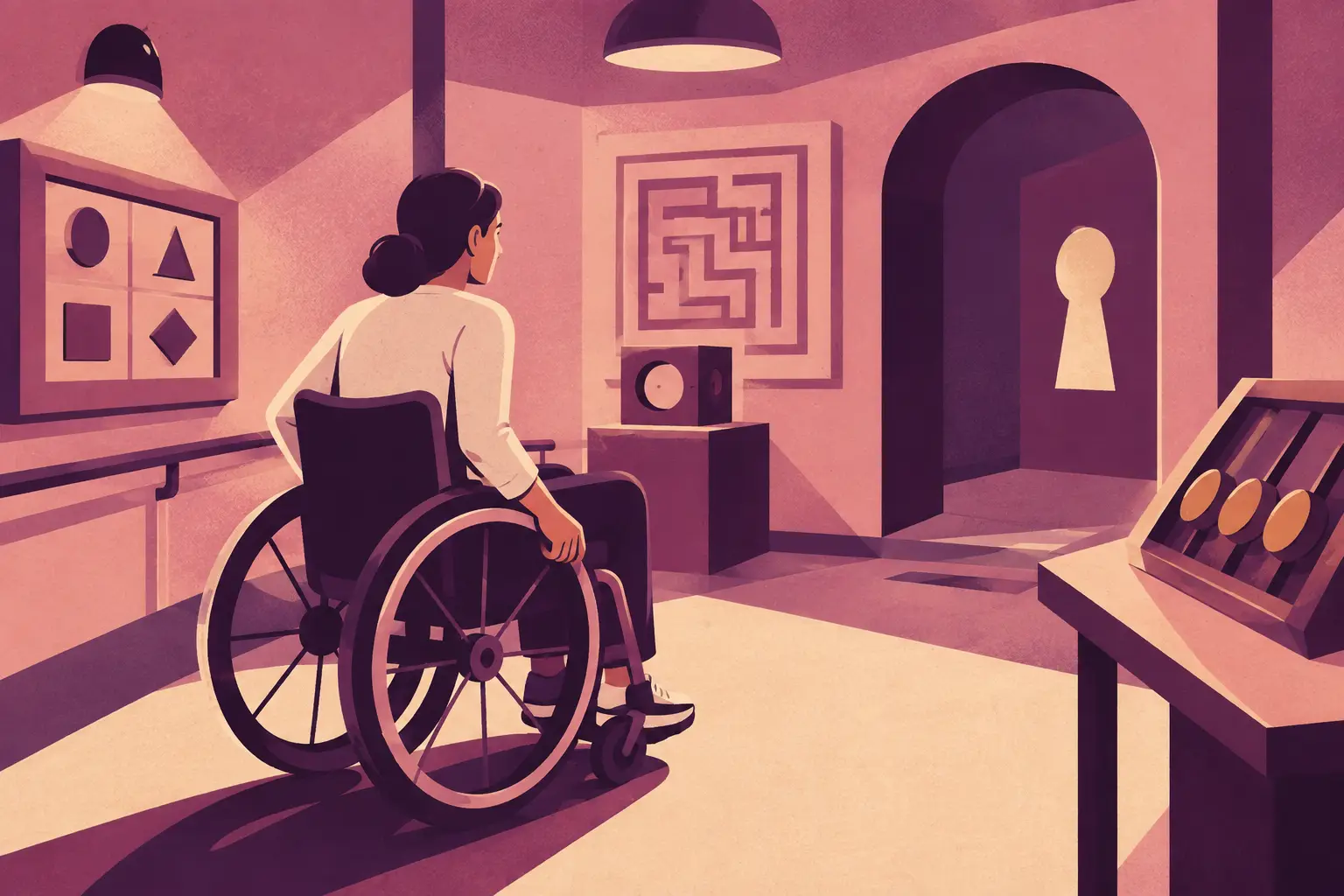
A great group game can lose its spark before the first puzzle if one guest is left wondering whether they can participate comfortably. This accessibility planning example is built for the practical questions that come up before an escape-room visit: Can everyone move through the experience? Are puzzles workable from a seated position? Will sounds, lighting, or scents create a problem? The goal is not to make assumptions about anyone's needs. It is to plan clearly enough that every guest can focus on the mystery.
What an accessibility plan should solve
Accessibility planning is not a single checkbox. A guest may use a wheelchair, need a place to sit, prefer clear verbal instructions, avoid flashing lights, manage sensory sensitivities, or need extra context before entering a themed environment. Some needs overlap. Others do not.
For the person organizing the group, the useful question is simple: what information will help each person decide whether this activity feels right for them? That means asking about the room itself, not relying on a general label such as accessible.
A good plan also preserves privacy. You do not need to ask a friend to explain their medical history to the entire group. Ask what would make the visit easier, then share only the practical details needed to organize the outing. If the answer is unclear, contact the venue before booking rather than hoping it will work out at the door.
An accessibility planning example for your group
Imagine six friends arranging a Philadelphia outing. One guest uses a wheelchair. Another is comfortable with spooky stories but gets overwhelmed by flashing effects. The organizer wants a challenge that feels shared, not an experience where two people wait while everyone else solves the room.
Start by identifying the non-negotiables. In this example, the group needs a room with wheelchair access and puzzles that can be played while seated. They also need to avoid flashing lights. The organizer can then narrow the choices before discussing theme, difficulty, or who thinks they will be the group's lead detective.
That order matters. Theme is part of the fun, but access determines whether the fun is available to everyone.
Begin with an invitation that makes questions welcome
When you send the group invite, add one straightforward sentence: Please let me know if there are mobility, seating, sensory, or communication details that would help make the game comfortable for you.
That phrasing is better than asking whether anyone has special needs. It tells guests what kind of information is useful without putting a label on anyone. It also gives people room to respond privately if they prefer.
For a birthday group, family gathering, or team event, give people time to answer before you choose a room. Last-minute planning can turn a solvable question into an unnecessary disappointment. If someone does not respond, do not assume that means they have no preferences. A quiet follow-up can be more helpful than a public group-chat prompt.
Match the room to verified details
At MindEscape, Thai Prison Escape is a useful option when mobility is central to the plan. It is wheelchair accessible, and its puzzles can be played seated. That gives the group a concrete starting point: participants can contribute to the escape rather than being treated as observers.
Little Greenhouse of Horrors is also wheelchair accessible, but it comes with a different planning conversation. This harder botanical mystery includes flashing lights and scents or aromas. A guest who is sensitive to either may decide it is not the right fit, even if mobility access works well for them. Contact MindEscape before booking if your group has mobility or sensory questions about that room.
This is where planning requires judgment instead of a universal recommendation. A group that wants a higher challenge level may be drawn to the greenhouse setting, but its sensory elements are a real trade-off. Another group may choose Thai Prison Escape because it better matches what everyone needs, even if the theme was not their first instinct.
Do not infer details that have not been confirmed. Wheelchair access does not automatically answer questions about turning space, transfers, hearing access, lighting, seating, or a particular guest's needs. Ask the venue specific questions and explain only the details relevant to the visit.
Plan for sensory comfort, not just physical entry
Escape rooms are designed to create atmosphere. That can mean darkness, sound effects, theatrical tension, unexpected discoveries, or themed environments. For many players, those details make a 60-minute game memorable. For others, they can become distracting or uncomfortable.
Before choosing a room, ask whether anyone would benefit from information about flashing effects, scents, darkness, loud sounds, frightening subject matter, or the ability to step out if needed. Frame the question as normal planning, not a test of whether someone is brave enough for the game.
A guest can enjoy mystery and still dislike flashing lights. Someone may love puzzles but prefer to avoid horror. Preferences are not failures of nerve, and treating them as ordinary logistics makes group planning much easier.
Give the game master useful context
A short advance note can make arrival smoother. Include the size of your group, the room you are considering, and the practical question you need answered. For example: Our group includes a wheelchair user who plans to participate from a seated position. Is Thai Prison Escape the appropriate room for us, and is there anything we should know before arrival?
For sensory concerns, be equally clear: We are considering Little Greenhouse of Horrors, but one guest needs to avoid flashing lights and strong scents. Can you help us determine whether the experience is suitable?
Specific questions lead to specific answers. They also give the game master a chance to flag details that a generic accessibility description cannot cover.
A sample plan you can adapt
Here is how the organizer in our example might put the information together. They first confirm that the group needs seated participation and wants to avoid flashing effects. They choose Thai Prison Escape because its wheelchair-accessible setup and seated-playable puzzles fit those requirements.
Next, they tell the group what to expect without spoiling anything: it is an adventure-themed, 60-minute escape experience built around teamwork and discovery. They let everyone know that the venue is at 521 S 4th Street near South Street, then ask guests to contact them privately if another accommodation question comes up.
Finally, they contact the venue with the group's mobility details before completing plans. The organizer does not promise access features they have not verified, and they do not volunteer a guest's personal information beyond what is needed. The result is a plan based on actual room information, not guesswork.
This same approach works for corporate groups and larger celebrations. Assign one organizer to communicate with the venue, but make sure that person is collecting input rather than deciding what everyone can handle. A manager may know the headcount, but individual participants know their own access needs best.
On the day of the game
Arrive with a little mental breathing room. A rushed entrance can make any group less comfortable, especially when someone needs time to orient themselves, ask a question, or review expectations. Let the game master know if there is a detail you discussed in advance so the conversation does not have to start over.
During the briefing, encourage the whole group to share discoveries aloud and divide tasks naturally. Seated participation should still mean active participation. One player may track clues, notice patterns, organize information, or coordinate the team's next move while others search different areas. Good escape-room teamwork is rarely about who can move fastest.
If a guest becomes uncomfortable, communicate early. The best choice may be a quick adjustment, a pause to clarify what is happening, or deciding that a different experience will be a better fit another time. Flexibility is part of hosting well.
When the plan needs a second look
Sometimes the answer is that a room is not suitable for your group on that day. That is useful information, not a planning failure. A horror theme, sensory element, physical layout, or participant preference can change the right choice.
Revisit the plan whenever the guest list changes, especially for a birthday, family activity, or workplace outing where someone may be added after the initial decision. It is easier to ask one more question than to expect a guest to adapt to an experience that was never designed around their stated needs.
The best group activity begins before the first lock clicks open: with a clear invitation, honest room details, and a plan that gives every player a real place in the story.